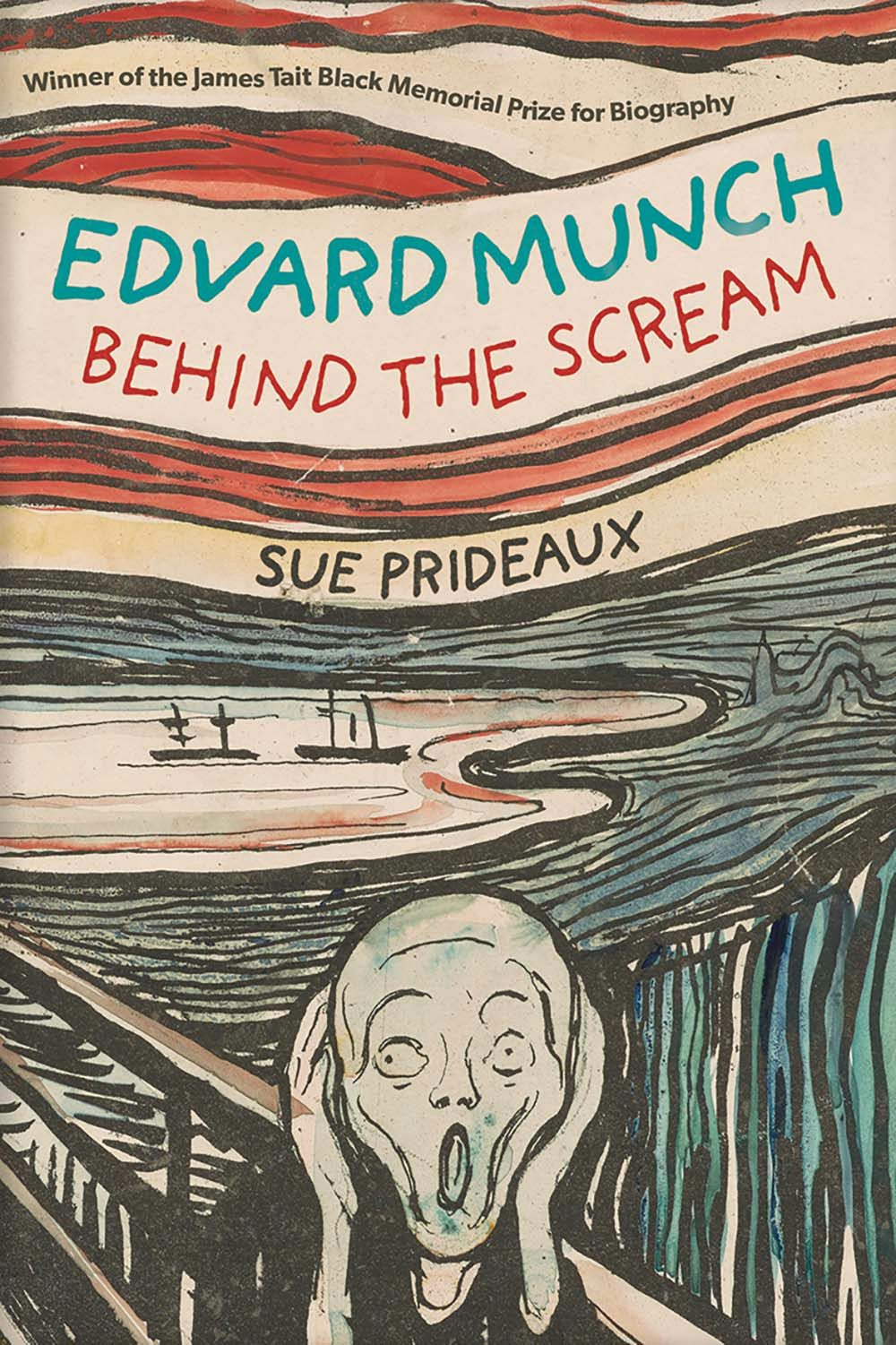
MUNCH, Edvard
 MUNCH, Edvard – Edvard Munch (12 December 1863 – 23 January 1944) was a Norwegian painter whose work became one of the foundational influences of Expressionism. His childhood was marked by illness, loss and the fear of hereditary mental illness — experiences that would shape his art profoundly.
Munch studied at the Royal School of Art and Design in Kristiania (today Oslo), where contact with the nihilist Hans Jæger encouraged him to paint his inner emotional world rather than outward reality. This „soul painting“ became the basis of his distinctive style.
Travel proved transformative. In Paris he absorbed the bold use of colour from Gauguin, Van Gogh and Toulouse-Lautrec; in Berlin he began his most ambitious project, the Frieze of Life — a cycle of paintings exploring love, anxiety, jealousy and death. His 1893 masterpiece The Scream, conceived after seeing the sky turn blood-red over Kristiania, became one of the most iconic images in Western art.
Despite growing fame, Munch struggled with his mental health and heavy drinking. A breakdown in 1908 marked a turning point; he sought treatment and gradually found stability. His later years were spent in productive solitude. Though his work was banned under Nazi occupation, most of it survived the war.
Beyond painting, Munch was a prolific printmaker, mastering etching, drypoint and aquatint largely self-taught from 1894 onwards.